NFTs in the Music Industry: Burst or Bubble
An NFT is a digital certificate of rights tied to an asset, often digital. Non-fungible means each token is unique. This is different from cryptocurrencies, which are interchangeable. While digital works can be copied easily, the NFT owner claims rights to the 'original' version. A creator might issue a limited series of NFTs. This can provide special access to select videos or music for certain ‘superfans.’ NFTs can also create tickets for events. Most NFTs are bought and sold on third-party marketplaces, which also help mint new NFTs. Often, the work linked to the NFT is not stored on the blockchain. Instead, most NFTs have metadata that points to an off-chain resource. Moreover, NFTs can connect to physical goods or experiences. In this case, the NFT acts as a ‘digital password’ to verify ownership (Eisman et.al, 2021).
Entrepreneurs in the creative industry have led the way in using NFTs. They aim to create new revenue streams and engage stakeholders in fresh ways. Well-known artists like Mick Jagger and Kings of Leon have tried charity-focused NFTs. Musician RAC sold an album as an NFT for $708,000. Despite their rising popularity, concerns exist about legal ownership of NFT assets. Speculation and fraud in NFT trading are also common issues. Additionally, there is no standard method for assessing the potential value of NFTs (Chalmers et al., 2022).
Artists, labels, and other stakeholders must assess their rights in the underlying work. They need to check if those rights allow them to mint an NFT. If an artist or label owns all rights, minting and selling an NFT is usually simple. However, if they do not own the rights or if there are prior grants that limit use, minting an NFT could breach existing agreements or third-party rights. Even when they own the rights, it is crucial to ensure the NFT doesn’t transfer more rights than intended (Eisman et al., 2021).
Under U.S. law, creators keep the copyright to their work as soon as it is made. This includes all forms of that work, no matter the format. Copyright holders have a “bundle of rights” for their creations. This means they control copying, performing, and displaying their work. Only the copyright holder can permit these rights, either fully or partially. In some cases, the creator, or “author,” is not the copyright holder. For example, companies own the copyright for works they produce. Also, clients own the rights to certain works made by freelancers if they are labeled “works made for hire.” This applies to many artists under record label contracts, which are often “work for hire” agreements required (Eisman et al., 2021).
Musical productions face unique licensing issues. Typically, composers and songwriters own the rights to the music arrangement and lyrics. The performing artist or record label owns the master copyright of the sound recording. If someone wants to create a derivative work, like a video with music, they need a “sync license” for the composition and a master use license for the recording. To make an audio-only recording of a composition, a “mechanical license” is required (Eisman et al., 2021).
Minting an NFT involves understanding the rights tied to the associated work. For instance, an artist wanting to create an NFT from a new music video must secure the right licenses. This includes permissions from vocalists, musicians, and any samples used. Songwriters and their publishers also need to be considered, as well as any interpolations in the music. When a work is ready for tokenization, it’s crucial to identify the necessary rights for creating the NFT. This includes knowing who can grant the buyer a digital “certificate of ownership.” Along with copyright ownership rights in the composition, sound recording, and visual work, NFT minters must check any contracts related to the music. This includes record label agreements to see who has the legal authority to mint the NFT (Eisman et al., 2021).
Independent artists or those free from a label agreement can mint NFTs for their master recordings. They need to secure rights held by joint owners or exclusive licensees. New or emerging artists with a major or independent label usually sign exclusive recording agreements. These agreements give the label rights to use the artist's recordings and album artwork for the duration of the copyright. Most label agreements have “catch-all” clauses. These clauses aim to include uses of recordings or artwork on future technologies and platforms not available when the agreement was signed. Minting an NFT linked to a recording or artwork could fall under this language (Eisman et al., 2021).
Established artists often have more power with their label. They can reserve certain rights, like merchandise, or get rights back after their agreement ends. Whether an artist or label can mint an NFT depends on the agreement's wording and how one views NFTs. Artists might try to work around these clauses by creating NFTs that do not fall under the label's rights. For instance, an artist could use their name to create original digital art that isn’t linked to songs or albums. In these cases, the artist's representatives should review trademark registrations and any active merchandising agreements (Eisman et al., 2021).
Labels will likely be careful to address NFT rights clearly in their agreements from now on. When negotiating these rights, both sides must consider that NFTs can link to various digital works or serve as coupons for physical goods. This includes merchandise and experiences like backstage meet-and-greet events with the artist. An NFT might also use the artist’s name, image, or likeness, which may be granted forever. Simply giving broad “NFT rights” to one party may overlook these details. Furthermore, many different blockchains and NFT marketplaces exist, and they often do not interact. Both parties should keep this in mind when defining NFT rights. They may also want to include blockchain-specific disclosures and risk factors in their agreements (Eisman et al., 2021).
When people buy NFTs, they usually do not get any intellectual property rights to the work linked to the NFT. This is similar to how buying physical items works. For instance, if someone buys a painting, they cannot make posters of it without permission. Rights only transfer to the NFT buyer through a specific assignment. Most NFT marketplaces state that no rights are included in the sale. Sometimes, artists clarify this when selling their NFTs. Many believe that NFTs automatically prove authenticity. However, an NFT only shows the blockchain address of its original creator. To confirm that this person or entity has the rights to the work, buyers need an independent way to verify it. Before purchasing, buyers should ensure they can authenticate the NFT's creator (Eisman et al., 2021).
NFTs are just pieces of computer code on a blockchain. This setup allows for automatic royalty payments in cryptocurrency whenever an NFT changes hands. The payment goes to the digital wallet of one or more stakeholders, like the artist or manager. Who gets the profits from the original sale or future earnings depends on the contract terms between the parties and how rights are defined in agreements that do not mention NFTs. Established artists can often negotiate better splits with their labels, especially if the label wants to encourage NFT creation. Some labels are eager to make deals with artists to promote NFTs. This can include giving advance consent for a specific NFT or agreeing on a split of the profits (Eisman et al., 2021).
The marketplace for artist-label NFT profit splits is changing. Artists should plan carefully with their advisers. They need to identify key deal terms. Artists must also consider how the label recoups NFT costs. Most marketplaces charge fees for minting NFTs. There may also be other costs for storing and preserving unique digital works. Another point to consider is whether the label might charge extra fees or “upcharge” the artist (Eisman et al., 2021).
NFTs can automatically send cryptocurrency to any compatible digital wallet. However, this means all stakeholders need a digital wallet. They must also accept the type of cryptocurrency from the NFT. Agreements must specify the cryptocurrency for payments. NFTs are immutable, so you cannot change the royalty structure or the wallet receiving payments once created. Agreements should reflect this fact. The parties might also want to conduct technical diligence on the NFT code. This helps ensure the code's actions match the contract terms. Labels, agencies, and managers are forming NFT “task forces” to assist artists with these technical and legal aspects (Eisman et al., 2021).
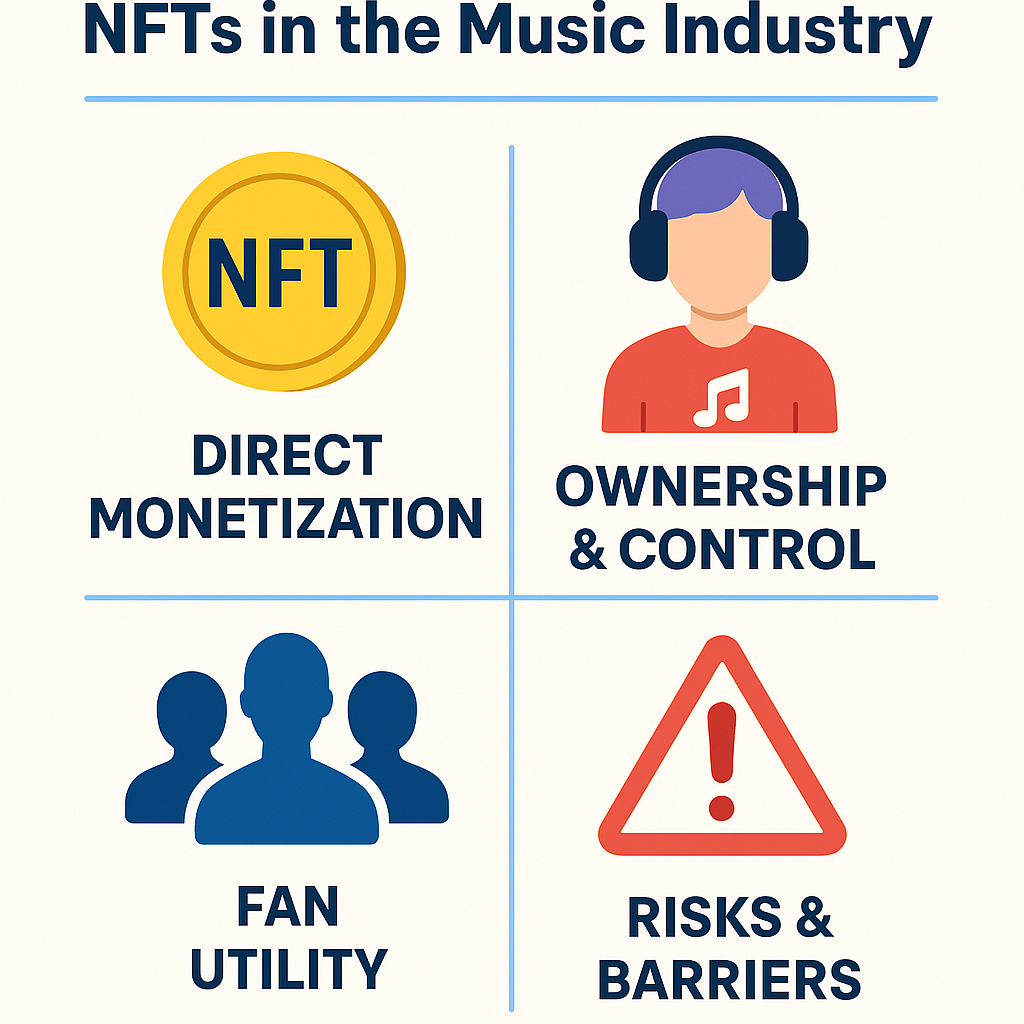
NFTs in the Music Industry: Snapshot
Explore how blockchain-based music assets are reshaping creative control, revenue, and representation across the industry.
💰 Direct Monetization
Artists sell music as NFTs, setting their own terms and receiving instant payments through smart contracts.
🧑🎤 Ownership & Control
Musicians can retain rights and distribute independently—challenging label gatekeeping.
👥 Fan Utility
NFTs unlock exclusive audio, video, and live experiences, fostering direct artist-fan relationships.
🌍 Representation Potential
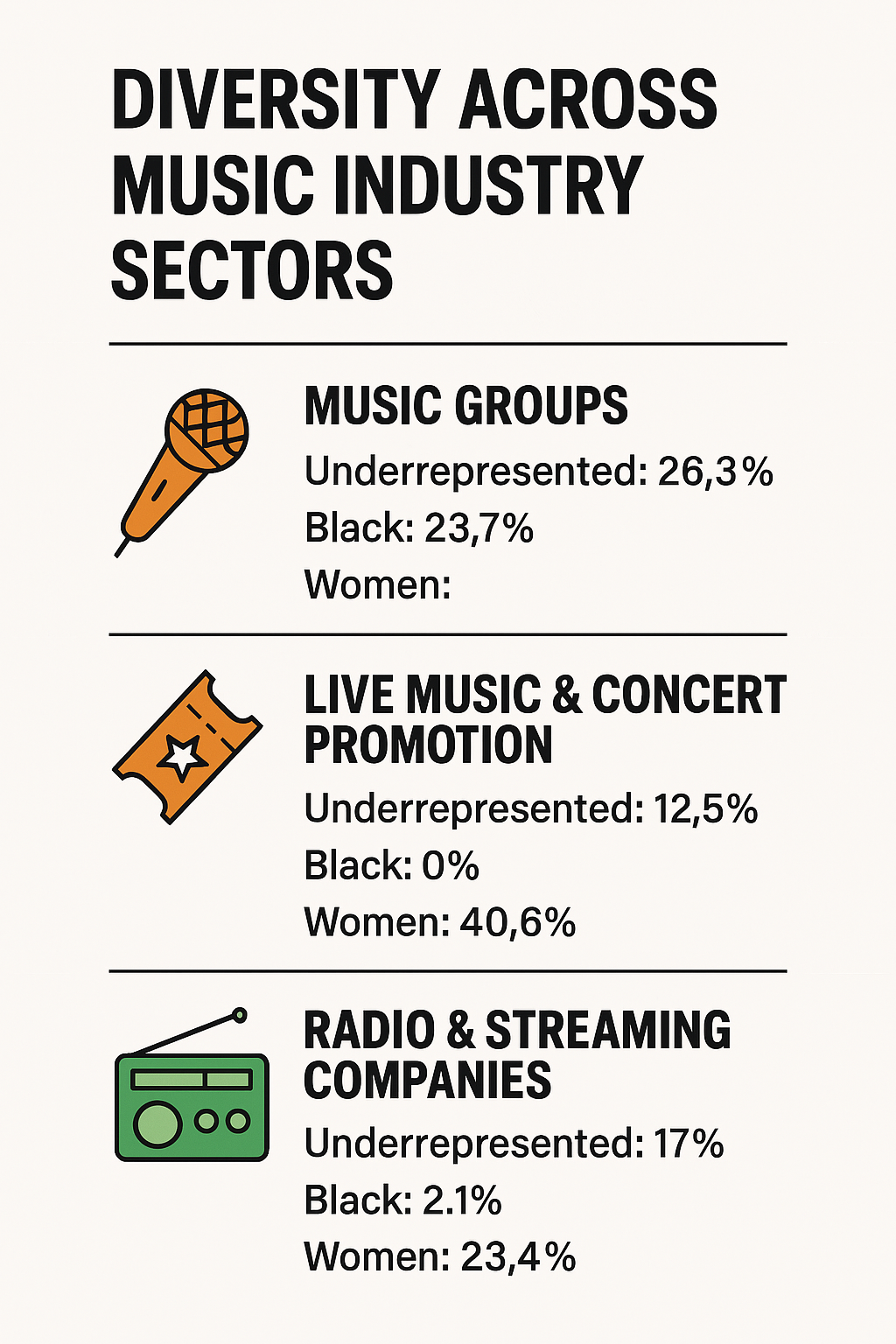
Blockchain offers new visibility for underrepresented voices—though access gaps persist.
⚠️ Risks & Barriers
Volatile value, scams, and copyright confusion complicate adoption and ethical use.
🔍 Key Properties of NFTs
💼 Ownership
Blockchain keys prove possession, and other nodes can publicly verify NFT ownership.
🔁 Transferability
Owners can freely transfer NFTs via dedicated marketplaces, keeping assets liquid and dynamic.
🔍 Transparency
Every transaction is traceable—blockchain ensures full visibility and decentralized verification.
🛡️ Fraud Prevention
NFTs help verify authenticity, preventing counterfeit trades in digital markets.
📜 Immutability
Metadata and transaction history are locked into the ledger—unchangeable and permanent.
Token Types and Platforms
| Blockchain | Standard | Token Types Supported | Unique Features |
|---|---|---|---|
| Ethereum | ERC-721, ERC-1155 | Non-fungible, Fungible, Semi-fungible | Supports operator delegation, mixed-token transfers, unique Token IDs |
| EOSIO | dGoods | Fungible, Non-fungible, Semi-fungible | Hierarchical naming, batch transfers, scalable contract structure |
| Algorand | ASA | Fungible, Non-fungible | No smart contract required, fractional NFTs, Clawback operator support |
| Tezos | FA2 (TZIP-12) | Fungible, Non-fungible, Fractionalized | Meta-consensus upgrade model, batch transfer, contract/token ID pairing |
| Flow | Cadence-based (no specific numeric ID) | Fungible, Non-fungible | Resource ownership, nested NFT capabilities, collection dictionaries |
References
Bamakan, S. M. H., Nezhadsistani, N., Bodaghi, O., & Qu, Q. (2022). Patents and intellectual property assets as non-fungible tokens; key technologies and challenges. Scientific reports, 12(1), 2178.
Chalmers, D., Fisch, C., Matthews, R., Quinn, W., & Recker, J. (2022). Beyond the bubble: Will NFTs and digital proof of ownership empower creative industry entrepreneurs?. Journal of Business Venturing Insights, 17, e00309.
Eisman, D. C., Levi, S. D., Ghaemmaghami, M., Neal, M. M., & Sedlmayr, T. (2021, May). Nonfungible tokens and the music industry: Legal considerations. The Licensing Journal.