According to Frankfurt School Marxists, popular culture created by the mainstream entertainment industry supports capitalism through the messages it conveys. The mainstream entertainment refers to the capitalist and bureaucratic system that promotes modern popular culture. Gramsci affirms that the ruling classes maintain control over the proletariat through both brute force (intimidation) and consensus, achieved by spreading hegemonic philosophies that suggest the privileged act in the best interests of the governed. Shusterman asserts that mainstream hip-hop is a “controlled culture” fashioned by ruling elites to support hegemonic philosophies and prevent the public from opposing the existing system. Likewise, Blair states that hip-hop artists were forced to become corporatized, so they eagerly championed the status quo by replicating the hegemonic systems of the major record labels (Vito, 2019).
In the 1990s, a notable revolution in rap culture occurred. The culture shifted away from the “Golden Era” (1979 - mid-1990s) principles, which were characterized by poetic skill, innovative beat production, a range of techniques, and diverse subject matter. The corporatization of rap music and the involvement of major record companies reduced the diversity and cultural influences of underground rap. By 1998, 81 million hip-hop records had been sold, with 70% of buyers being white Americans. As major record labels invested in artist and album production, they made their investment less risky by standardizing music to increase sales and profits. Major labels were also able to acquire independent record companies. Furthermore, they bought radio stations and flooded the market with their preferred artists through the “pay for play” scheme (Vito, 2019).
Because of the “pay for play” scheme, independent artists found it hard to get their songs on the radio, leading them to sign contracts with major record labels for financial support. Copyright ownership shifted from the artist to the record company, enabling it to sell and profit from the music. This concentrated music ownership in the hands of a few white men. Scholars have highlighted the subversion and takeover of important hip-hop labels by white executives like Malcolm McLaren, Rick Rubin, and Tom Silverman as early as the 1970s. Today, three record companies own or distribute more than 85% of the music circulated worldwide (Vito, 2019).
Authenticity is a fundamental element of beliefs in commercial rap. It consists of ideas that determine who can legitimately interpret and participate in culture. These beliefs are rooted in ‘street code’, which states that Black males from mainly poor neighborhoods must publicly show their willingness to engage in violence if forced. Consequently, all underprivileged Black males are expected to fight when pushed and to harm anyone perceived as a threat to protect their territory and reputation. In this hyper-masculine setting, Black males often feel pressured to appear sadistic even if they are not. Before 1988, hip-hop songwriters and rappers were mostly inspired by their locality, celebrations, romance, comedy, and satire. Currently, the themes of violence, homophobia, and misogyny dominate rap music to boost record sales. Record labels and executives nurture and promote the artists who incorporate these topics in their lyrics (Oware, 2018).
“Conscious rap” represents the understanding of marginalized, subordinated, and discriminated people; on the other hand, “gangster rap” portrays similar depictions of the ghetto, but blends consumerism and patriarchy. They combine “street” acceptability with commercial accomplishments as a hustler protagonist. Gangster rap highlighted the rebellious, masculine, and violent side of ghetto life. Gangster rap is mostly associated with mainstream hip-hop, while conscious rap is predominantly underground (Oware 2014). The mainstream incorporates both gangster rap and conscious rap, and underground and indie artists often tackle the subjects of gangster rap.
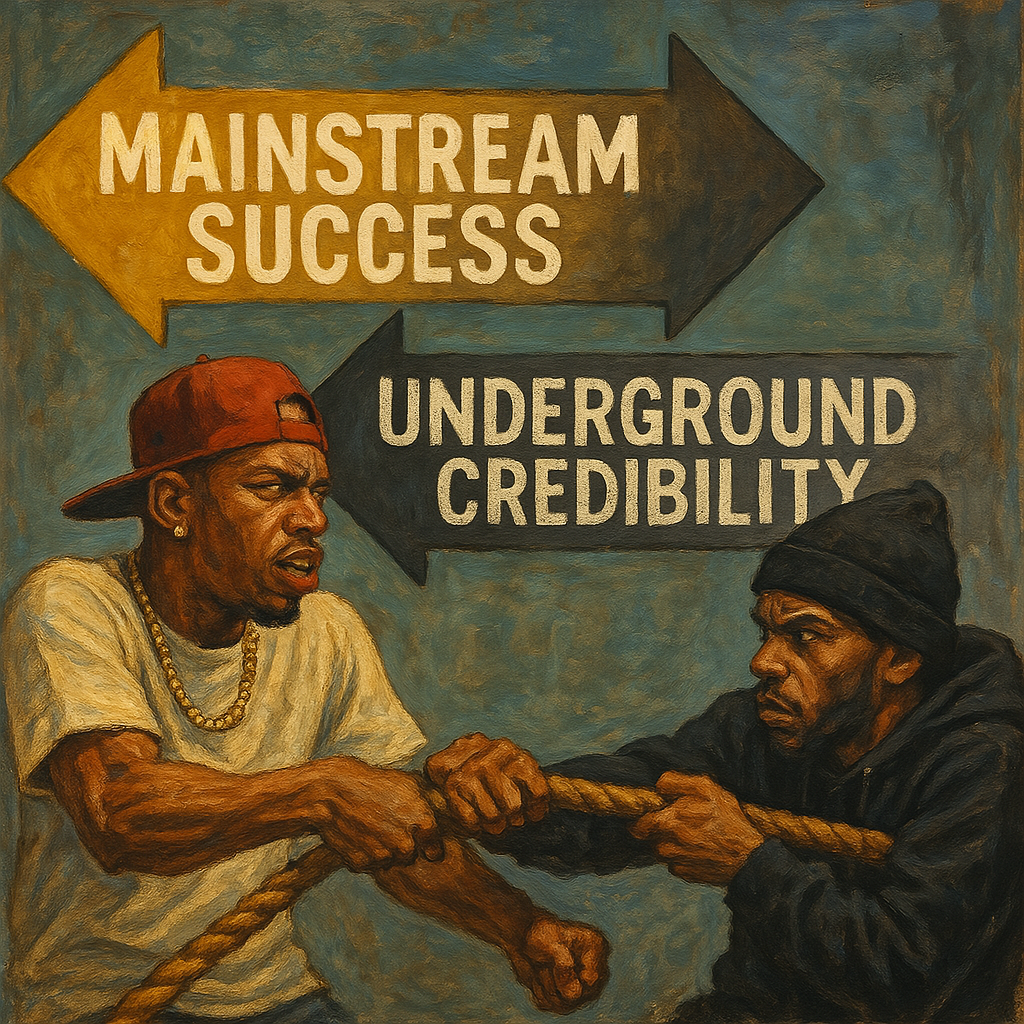
The typical underground artist is usually confined to the bottom of the acceptance spectrum, where listeners are friends, kinfolk, and other acquaintances. As they become more infamous, their fan base expands further outside their sphere, and they adopt professional methods such as record label development and bookkeeping. Ultimately, underground artists decide to either stay underground, partner with or form an independent record label, or sign with a major record company (Vito, 2019). Major record labels focus on signing proven indie artists who want to graduate into the mainstream. Some indie artists view the underground scene as a “stepping stone” to signing lucrative contracts with major record labels (Oware 2014). On the other hand, some artists such as MF Doom started their careers as mainstream but found success as independent artists (Vito, 2019).
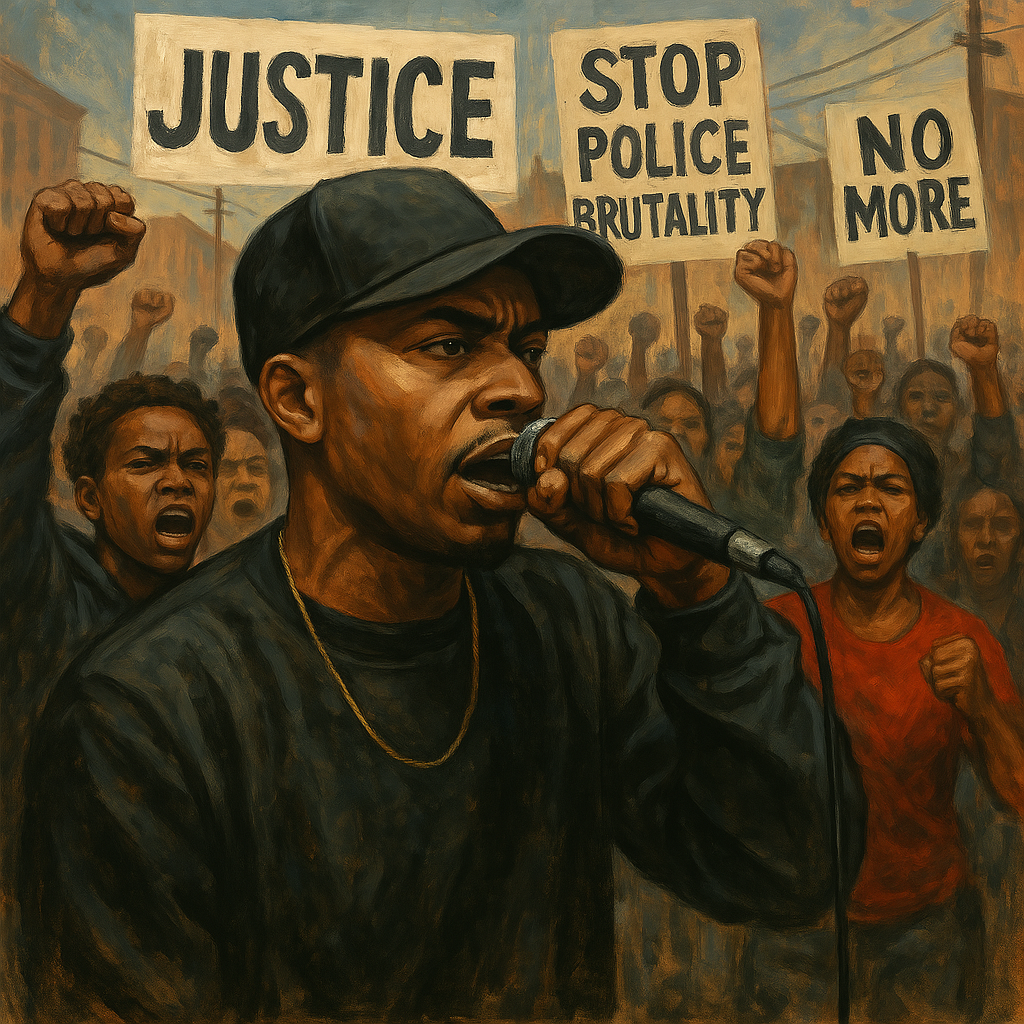
As commercial rap became more mainstream, underground rap materialized as a counter-movement in search of cultural and historical relevance. There are obvious similarities and dissimilarities between mainstream hip-hop artists retained by big or “major” record companies and underground or alternative hip-hop artists not signed to the major music labels. Both sets of artists’ music are centered on themes of violence, homophobia, misogyny, and hypermasculinity, reinvigorated by commercial entities. Underground rap music distorts the boundaries of restricted (non-commercial) and large-scale production (commercial). It incorporates anti-establishment, civically stimulating, and socially mindful lyrics to advance non-commercial interests. However, “Rappers’ habitus or lived experiences force the artists to adopt commercial rap market methods to appeal to both alternative rap customers and big record labels (Oware, 2014).
References
Oware, M. (2018). I Got Something to Say : Gender, Race, and Social Consciousness in Rap Music. Palgrave Macmillan.
Oware, M. (2014). (Un)conscious (popular) underground: Restricted cultural production and underground rap music. Poetics, 42, 60-81. https://doi.org/10.1016/j.poetic.2013.12.001
Vito, C. (2019). The values of independent hip-hop in the post-golden era: Hip-hop’s rebels (p. 184). Springer Nature.